
Choosing the right golf cart tires sounds simple until you start looking at the hundreds of options available. Turf tires, street tires, all-terrain tires, low-profile tires, oversized tires—the choices can quickly become overwhelming.
After years of helping golf cart owners select tires for everything from neighborhood cruising to off-road adventures, I’ve found that most people focus on the wrong things. They get caught up in appearance, tread patterns, and wheel designs before considering how the cart is actually going to be used.
The reality is that the right tire depends on your terrain, your driving habits, your suspension setup, and the overall experience you want from your golf cart.
Start With How You Actually Use Your Cart
The first question I ask customers is simple: “Where do you drive your cart most often?”
This single question eliminates dozens of tire options immediately.
If you’re primarily driving on paved roads in a retirement community or neighborhood, your tire needs are completely different from someone who uses their cart on acreage, hunting property, campgrounds, or gravel roads.
Too many people shop for tires based on appearance alone. They see an aggressive tread pattern online and assume it must be better because it looks tougher. Then they install the tires and discover that the ride is rougher, noisier, and less comfortable than before.
The best tire is not necessarily the most aggressive tire. It’s the tire that matches the conditions where your cart spends most of its time.
The Biggest Mistake I See Golf Cart Owners Make
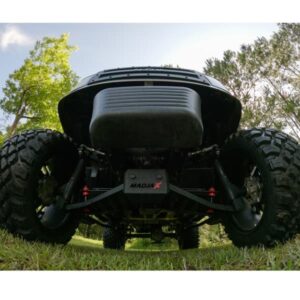
Without question, the most common mistake I see is people buying the largest tire that will physically fit on their cart.
Everyone loves the look of a lifted golf cart with oversized wheels and tires. There’s nothing wrong with that. The problem is when customers don’t understand the tradeoffs.
Larger tires can affect:
- Ride quality
- Steering effort
- Acceleration
- Battery performance
- Clearance issues
- Overall handling
Many customers focus entirely on the appearance of a larger tire package and don’t realize they’re changing the way the cart drives.
I’ve had customers call after installation and tell me the cart doesn’t ride the way they expected. In most cases, the issue isn’t the tire itself. It’s that the tire wasn’t matched properly to the cart’s suspension, lift kit, or intended use.
Why Tire Sidewalls Matter More Than Most People Realize
One area that’s often overlooked is sidewall height.
The sidewall plays a major role in determining ride comfort.
A tire with a taller sidewall can absorb bumps and uneven terrain much better than a low-profile tire. On the other hand, low-profile tires often provide a sportier appearance and sharper handling characteristics.
This becomes especially important when customers are considering larger wheel packages.
Many people move from an 8-inch wheel to a 12-inch or 14-inch wheel because they love the appearance. What they don’t always realize is that larger wheels typically mean shorter sidewalls.
Shorter sidewalls generally provide less cushioning over bumps.
When helping customers choose tires, I always explain that there is a balance between aesthetics and comfort. Neither choice is wrong. It’s simply a matter of understanding the tradeoffs before making a purchase.
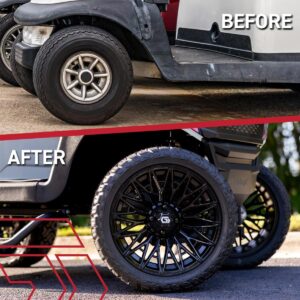
A Real-World Example of Choosing Style Over Comfort
One situation I encounter regularly involves customers who want a more aggressive look for their golf cart.
They find a wheel and tire package they absolutely love and install it expecting an upgrade in every category.
After a few weeks, some of them come back and mention that the ride feels harsher than before.
The reason is usually straightforward. The new setup looks fantastic, but the lower-profile tire has less sidewall flexibility than the original tire.
This doesn’t mean the tire choice was wrong.
If appearance was the primary goal, they achieved exactly what they wanted. The important lesson is simply understanding that every tire choice involves compromises.
The ideal tire setup depends on what matters most to the owner.
Matching Tires to Your Lift Kit
Another critical factor is whether your cart has a lift kit.
Lifted carts create opportunities for larger tire sizes, but they also introduce new considerations.
Before recommending any tire, I always verify:
- Lift kit height
- Wheel offset
- Suspension clearance
- Fender clearance
- Intended tire size
Even a tire that technically fits may rub under certain conditions if the overall setup isn’t properly matched.
This is one of the biggest reasons I encourage customers to seek advice before ordering. A quick conversation can prevent costly mistakes and save a lot of frustration.
Don’t Ignore Tire Pressure
Tire pressure is one of the most overlooked aspects of golf cart performance.
I’ve seen customers spend thousands of dollars upgrading wheels, tires, suspension, and accessories while never checking their tire pressure.
Incorrect PSI can lead to:
- Poor ride quality
- Uneven tread wear
- Reduced traction
- Shorter tire life
- Increased risk of tire failure
Even the best tire on the market won’t perform properly if it’s not inflated correctly.
That’s why I always recommend checking tire pressure regularly and following the manufacturer’s guidelines whenever possible.
How I Help Customers Narrow Down Their Choices
When someone tells me they’re overwhelmed by all the available tire options, I simplify the process.
Instead of starting with specific tire models, I start with questions.
I want to know:
- Where do they drive?
- How often do they drive?
- Is comfort important?
- Is appearance important?
- Is the cart lifted?
- Do they need off-road traction?
- Are they carrying extra passengers or cargo?
Once those questions are answered, the list of potential tires becomes much smaller.
At that point, we can focus on finding the tire that delivers the best combination of performance, appearance, comfort, and value.
There Is No Universal “Best” Golf Cart Tire
One of the biggest misconceptions in the golf cart industry is the idea that there is a single best tire.
There isn’t.
The best tire for a campground owner may be completely wrong for a neighborhood cruiser. The best tire for a hunting cart may be terrible for someone who spends 100% of their time on pavement.
That’s why I always encourage golf cart owners to think beyond appearance and consider how the tire will actually perform in the real world.
Final Thoughts
Choosing the right golf cart tires comes down to understanding how you use your cart and what matters most to you.
A great-looking tire may not provide the smoothest ride. A comfortable tire may not deliver the aggressive appearance you’re after. An off-road tire may be unnecessary if you spend all your time on pavement.
The goal isn’t to find the most popular tire or the biggest tire. The goal is to find the tire that fits your cart, your terrain, and your expectations.
When you take those factors into account, choosing the right golf cart tires becomes much easier—and you’ll end up with a setup that performs as good as it looks.